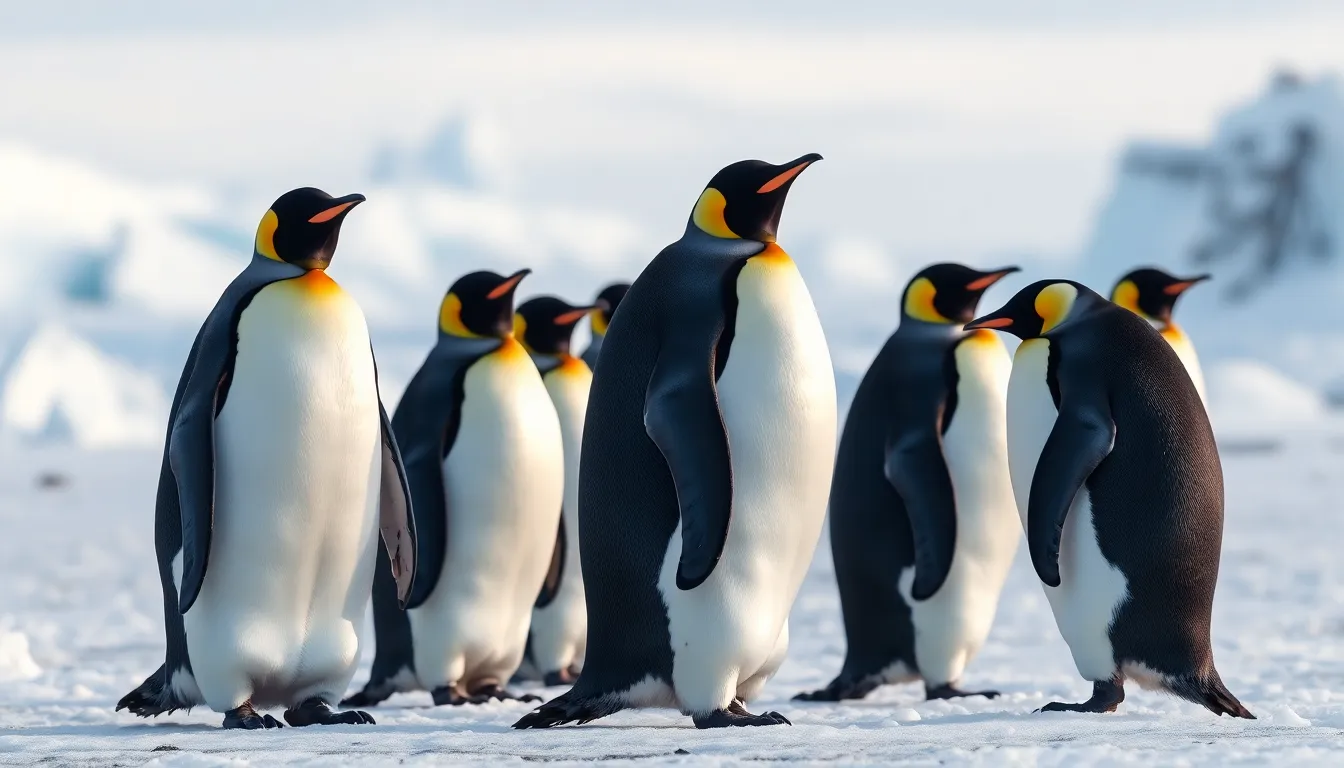
Penguins are the coolest birds on the planet, and not just because they waddle like they’ve got somewhere important to be. These flightless wonders are full of surprises that’ll make any kid giggle and gasp. From their tuxedo-like appearance to their impressive swimming skills, penguins are nature’s comedians, ready to steal the show!
Fun Facts About Penguins For Kids
Penguins can’t fly, but they are excellent swimmers. They use their wings, called flippers, to glide through water at speeds up to 15 miles per hour.
Many people think of penguins as living in icy Antarctica, but not all species do. In fact, the Galapagos penguin resides near the equator.
Penguin feathers keep them warm and dry, featuring a waterproof coating. They have as many as 70 feathers per square inch to provide insulation against cold temperatures.
Befitting their tuxedo-like appearance, penguins have a unique way of communicating. They use a variety of sounds to express emotions and identify each other among large groups.
Interesting enough, penguins can dive deep into the ocean. Some species can reach depths of approximately 1,800 feet while searching for food.
Emperor penguins are the largest penguin species, standing over 4 feet tall and weighing up to 90 pounds. These impressive birds can endure harsh winter temperatures, withstanding conditions as low as -76 degrees Fahrenheit.
If you look closely, each penguin has its own distinct markings and patterns. This individuality helps them recognize their mates and chicks within colonies.
Lastly, penguin parents take turns caring for their young. They share responsibilities like keeping eggs warm and catching fish to feed the chicks after they hatch.
Penguins are not just fascinating to watch; they are also crucial to their ecosystems. Their unique behaviors, adaptations, and social structures make them special creatures.
Types Of Penguins
Penguins come in various species, each with unique traits and habitats. Learning about these different types adds to the excitement of discovering life in the cold.
Emperor Penguins
Emperor penguins stand as the largest penguin species, growing over 4 feet tall. They thrive in Antarctica’s freezing temperatures, enduring harsh conditions. Notably, these birds can dive deep underwater, reaching depths of about 1,800 feet while hunting for fish. Emperor penguins also exhibit remarkable parenting behaviors. Both parents take turns incubating their eggs, keeping them warm during the harsh winter months. Consequently, they showcase teamwork essential for their chicks’ survival.
Adélie Penguins
Adélie penguins are one of the most commonly found species in Antarctica. Measuring about 2 feet tall, they’re easily recognized by their striking black and white coloration. These penguins thrive on a diet primarily consisting of krill and small fish. They exhibit a playful nature, often sliding on ice to gain speed while returning to their nests. Adélie penguins form strong monogamous bonds, returning to the same partner each breeding season. Due to climate change, their habitats face threats; therefore, conservation efforts are vital for their survival.
Gentoo Penguins
Gentoo penguins rank as the third-largest penguin species, typically reaching 30 inches in height. They thrive on sub-Antarctic islands, showcasing adaptability to different environments. Their distinguishing feature includes bright orange beaks and white patches above their eyes. In addition, Gentoo penguins are known for their fast swimming abilities, reaching speeds up to 22 miles per hour. Nesting behaviors are also fascinating, as they build their homes from pebbles, which they actively collect. Family roles play a significant part, with both parents sharing the responsibility of chick-rearing.
Penguin Habitats
Penguins inhabit a variety of environments, showcasing their adaptability to different climates and ecosystems. Their habitats range from icy realms to warmer coastal regions.
Antarctic Regions
Antarctic regions provide a frigid yet essential home for several penguin species, including the emperor and Adélie penguins. These birds manage to thrive in temperatures that can plunge below -40 degrees Fahrenheit. Dense ice and snow offer crucial breeding grounds where penguins build nests. Given their thick layers of blubber and specialized feathers, these birds retain warmth even in severe cold. Annual migrations occur, allowing them to find food and suitable nesting sites. Alongside their impressive survival skills, penguins have adapted to the unique challenges of this extreme climate.
Coastal Areas
Coastal areas offer a different setting for penguins like the Galapagos and Humboldt species. Temperatures in these regions can be noticeably warmer, with some penguins living near the equator. Rocky shorelines often serve as breeding sites, providing shelter and protection for penguin colonies. Coastal waters teem with fish and other marine life, ensuring an abundant food supply. Nesting occurs in burrows or under shrubs, protecting chicks from predators. These penguins exhibit a remarkable ability to thrive outside the icy expanses typically associated with their kind.
Unique Penguin Traits
Penguins possess remarkable qualities that set them apart from other birds. These distinct traits make them engaging and captivating creatures for children.
Swimming Abilities
Swimming defines a penguin’s lifestyle. Penguins excel in the water, using their flippers like wings to propel themselves. Speeds can reach 15 miles per hour, making them agile swimmers. Some species can dive deep, reaching depths of 1,800 feet while searching for fish. Adaptations, such as a streamlined body, enhance their swimming efficiency. Penguins glide gracefully, showcasing impressive maneuverability to evade predators and catch prey.
Social Behavior
Social interactions characterize penguin life. Communicating through various sounds helps them identify each other in crowded colonies. Penguins often form strong bonds, especially among mating pairs. Some species exhibit playful behavior, engaging in social activities like sliding on ice or diving together. Parental care involves shared responsibilities, with both mother and father nurturing their chicks. Their social structure promotes cooperation, enhancing survival in challenging environments.
Fun Facts To Share
Penguins sure are fascinating creatures with many quirky traits.
Fun Quirks
One amusing fact involves their unique way of sliding on ice. Penguins belly slide across ice, using their bodies to glide effortlessly, saving energy while moving quickly. Another peculiar behavior occurs during their courtship rituals. Males present pebbles to females, as these stones help build nests and symbolize affection. Notably, penguins often create “supercolony” sites, where thousands gather, forming a lively community for breeding and raising chicks. Penguins also display social interactions that include vocalizations and playful antics, enhancing their bonds with one another.
Interesting Statistics
When diving for food, penguins can reach remarkable depths. Some species dive up to 1,800 feet, showcasing their impressive hunting skills. Approximately 17 different species of penguins exist worldwide, each adapted to various habitats. Emperor penguins, the largest, can weigh between 50 to 100 pounds and stand over 4 feet tall. It’s also worth noting that penguins can hold their breath for up to 20 minutes while underwater, enabling them to pursue prey effectively. Interestingly, penguin feathers number around 70 per square inch, providing insulation and waterproofing essential for survival in harsh conditions.
Conclusion
Penguins are truly remarkable creatures that captivate the hearts of children and adults alike. Their playful nature and unique adaptations make them a joy to learn about. From their impressive swimming skills to their distinct social behaviors, there’s always something new to discover about these fascinating birds.
By exploring the various species and their habitats, kids can appreciate the diversity of penguins around the world. Whether it’s the majestic emperor penguin or the charming Galapagos penguin, each brings its own special traits to the table.
Encouraging curiosity about penguins can inspire a love for wildlife and the importance of conservation. These delightful birds remind us of the wonders of nature and the need to protect their habitats for future generations.